Designing a Daily Reset Zone: A Simple System for Tidy Evenings
On many of my evenings I notice the same quiet pattern: a pair of keys on the kitchen counter, a folded jacket on the dining chair, and a near-invisible pile of mail that somehow grows three inches overnight. These small, recurring deposits don’t need dramatic solutions—what they need is a deliberately designed place and a short set of actions that intercept clutter before it spreads. Observing where things land naturally is the first step in shaping a home system that feels effortless.
1. Find the anchor: where the household deposits things
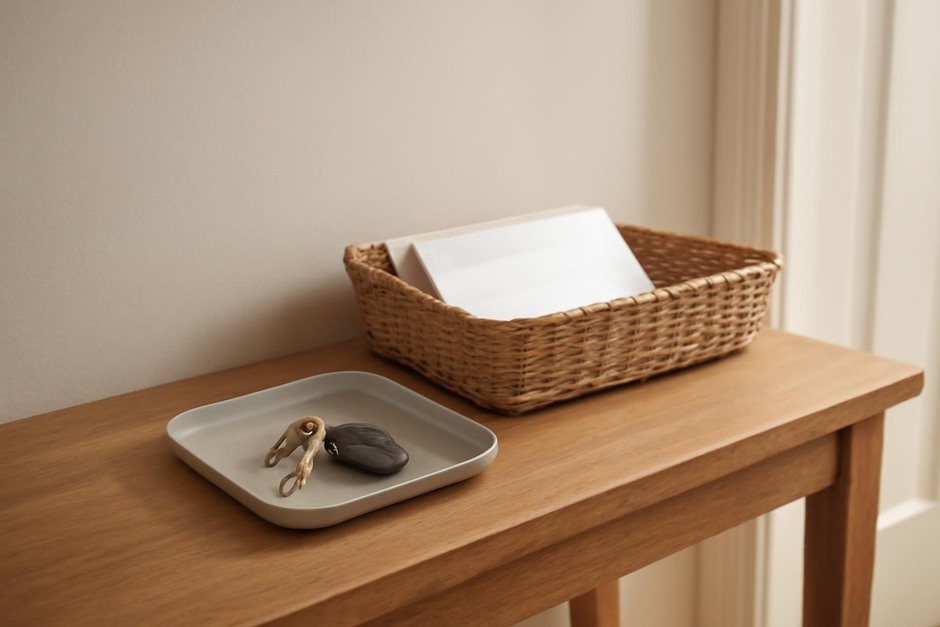
Start with ten minutes of observation over two or three days. Stand back and watch what people do when they come home, when jackets come off, when bags are emptied. The goal is to identify one small surface or zone that already receives most stray items. Common anchors are a segment of the entry table, the top of a kitchen counter near the door, or a bench by the mudroom.
Choose an anchor that is:
- Close to where people enter the house (but not a high-traffic obstruction).
- Big enough for the typical items you see—keys, mail, phone, sunglasses—but not so large it becomes a catch-all.
- Visually distinct from surrounding surfaces so it reads as ‘the place’ to drop things.
2. Curate what belongs there and what doesn’t
A reset zone works when it has clear boundaries. Decide, out loud or in a written list, which categories of items are allowed to land there. Typical allowances include keys, incoming mail, a daily wallet, and work ID. Everything else has an assigned home: reusable bags in a basket near the door, jackets on hooks, shoes on a mat.
Helpful constraints:
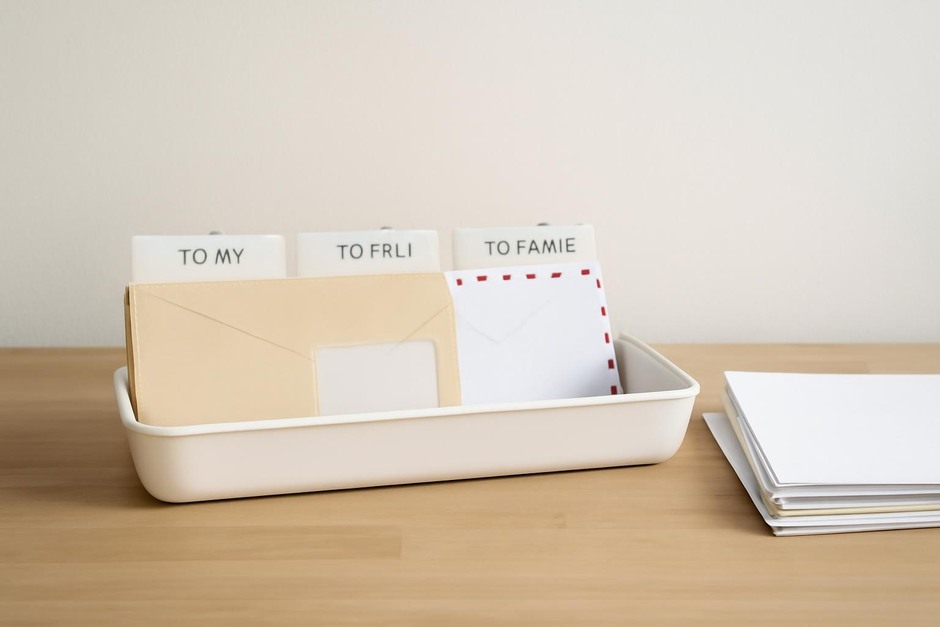
- Limit the zone to one or two small containers: a shallow tray for keys and loose change, and a slim slot for mail and papers.
- Label or visually separate containers—use color, texture, or a small sign—so the intended use is obvious.
- Keep decision-making minimal. If an item doesn’t have an obvious place, create a short-term ‘action’ spot for things that need a simple task (e.g., ‘to file’) and limit it to three items at a time.
3. Build two short evening habits
New systems live or die based on habit, not intentions. Design two habits that take a combined 2–5 minutes and anchor them to a stable cue—coming in the door and preparing for bed work well.
- The drop-and-sort cue: As items come off, place them directly into their designated container. Make three simple moves: keys to the tray, mail to the slot, and quick decision—keep, toss, or action. Keep a small waste bowl nearby so trash doesn’t make it into the zone.
- The pre-bed sweep: Five to seven minutes before lights-out, run a single pass through the primary living areas with a basket. Rehome anything that doesn’t belong in the reset zone. This is not deep cleaning—think of it as returning strays to their houses.
These two habits reduce the cognitive load the next morning and make surfaces feel clearer without a large time investment.
4. Maintain with a weekly refresh and lightweight rules
Daily habits prevent buildup, but a weekly refresh keeps systems honest. Choose a single night each week for a 10–15 minute reset: empty the mail slot, sort action items, wipe the tray, and check that assigned homes still make sense.
Establish a few lightweight rules that everyone in the household understands:
- One in, one out for decorative items: if you add a plant or bowl, remove something else from the surface.
- Mail gets dealt with within two days—toss junk immediately, file or add to the ‘action’ spot otherwise.
- If an item sits in the action spot for more than a week, either act on it, relocate it to a permanent home, or let it go.
Periodically (once a season), reassess: has the anchor become too crowded? Have new types of items started landing there? Observation, then small adjustments, keeps the system aligned with changing habits.
Measured conclusion
A reset zone is a small commitment with outsized returns. By observing where things naturally collect, limiting the zone’s scope, practicing two short nightly habits, and doing a weekly refresh, you convert everyday clutter into a manageable routine. The key is not perfection but predictability: when everyone knows where things go and the actions required are brief and repeatable, evenings feel calmer and mornings start with less friction.